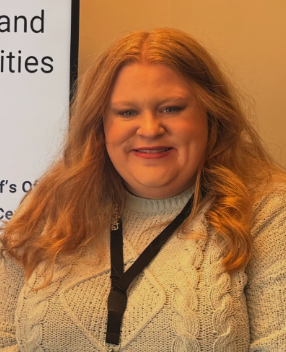
PERRYSBURG, OH, UNITED STATES, October 14, 2026 /EINPresswire.com/ — Ohio Social Worker Advocates for Treatment-First Approaches, Sustainable Community Programs, and Greater Access to Care.
Perrysburg, Ohio – Cristina Christensen is a Licensed Independent Social Worker with a supervision designation (LISW-S) who has spent the past decade working across behavioral health, criminal justice, and community services in Ohio. Her experience includes clinical leadership, program development, direct client care, and cross-system collaboration, with a focus on addiction, mental illness, trauma, and crisis response.
Cristina’s path into social work was shaped by both personal experience and an unexpected career discovery. Her mother was a nurse who faced her own challenges with mental health, substance use, and chronic medical conditions. Cristina lost her mother when she was just 14 years old, an experience that continues to influence how she views the people and systems she works with today. While attending community college, Cristina initially considered following in her mother’s footsteps by becoming a nurse. But after taking a career aptitude assessment that suggested social work, she began exploring a different path.
For Cristina, the work has always been about more than a profession. She recognizes her mother in many of the people social workers serve and understands how complex someone’s circumstances can be. That perspective has shaped her commitment to building systems that respond with compassion, recognize the whole person, and provide meaningful support rather than judgment. She wants to help create the kinds of systems that could have better supported someone like her mother.
Cristina went on to earn a Bachelor of Science in Social Work from Bowling Green State University and a Master of Social Work from The Ohio State University. She later spent more than four years as Criminal Justice Program Supervisor at the Family Resource Center of Northwest Ohio and has also served as an adjunct professor at Bowling Green State University.
Cristina credits both the Family Resource Center of Northwest Ohio and the Hancock County Alcohol, Drug Addiction and Mental Health Services (ADAMHS) Board with providing some of the most meaningful opportunities of her career. Through their support, mentorship, and commitment to professional development, she was introduced to deflection work and given opportunities to grow as a leader, clinician, and public speaker. She remains grateful to both organizations for investing in her development and helping shape the direction of her career.
Much of Cristina’s professional identity is rooted in her work connecting behavioral health and criminal justice systems. She has been a strong advocate for deflection models, which help connect people experiencing addiction and mental health challenges with treatment and community support rather than relying solely on arrest and incarceration. During her time at the Family Resource Center, she oversaw criminal justice initiatives that included law enforcement deflection, jail-based behavioral health services, and reentry planning. She also served as project director for a three-year, $1 million federal Bureau of Justice Assistance grant, working alongside law enforcement, local government, treatment providers, and community organizations to strengthen coordinated responses to substance use and mental health challenges.
Cristina’s work has provided opportunities to contribute to national conversations about behavioral health and criminal justice. Through her involvement with the Center for Health and Justice and Treatment Alternatives for Safe Communities (TASC) in Chicago, she has shared experiences and insights related to deflection and community-based responses to addiction. She also had the opportunity to speak alongside representatives from the Centers for Disease Control and Prevention (CDC) and Johns Hopkins University, highlighting Hancock County’s collaborative work to establish a suicide and overdose fatality review process. She currently serves on the Wood County Alcohol, Drug Addiction, and Mental Health Services Board.
Cristina attributes her success to a deep desire to help build a world better than the one she grew up in, one her young son can look at with pride. She is also quick to recognize that none of her accomplishments have happened in isolation. Throughout her career, she has had the privilege of working alongside dedicated peer recovery supporters, case managers, therapists, supervisors, law enforcement officers, city leaders, and community partners. Just as importantly, she credits the individuals and families she has served, whose experiences and perspectives have continually challenged her to learn and do better.
Those experiences have reinforced her belief that meaningful progress requires communities to move beyond working in silos. Law enforcement, behavioral health professionals, community organizations, and people with lived experience all bring different knowledge and perspectives to the table. Rather than expecting everyone to approach challenges the same way, she believes those differences should be recognized as strengths. For Cristina, collaboration means listening to one another, respecting each person’s expertise, and working toward shared solutions.
Cristina sees funding uncertainty as one of the most pressing challenges in her field. Grant-dependent programs can lose momentum, and practitioners can be pushed away from critical community work when support is not guaranteed. She also believes the current healthcare reimbursement system leaves a significant gap in how communities reach people who need help. While insurance generally reimburses providers for covered services once someone has entered care, much of the outreach, relationship-building, and engagement necessary to get someone through the door falls outside traditional reimbursement structures.
For Cristina, finding sustainable ways to fund these efforts is essential. She believes meaningful engagement often begins with understanding what matters most to the individual, whether that is housing, food, transportation, or simply having someone listen without judgment. When people feel heard, valued, and supported in meeting their immediate needs, they may become more willing to engage in treatment and other long-term recovery services. She believes communities must invest in this work, recognizing that meaningful support often needs to come before someone is ready to engage in treatment.
This is especially important in criminal justice settings, where people experiencing addiction or mental health challenges may encounter law enforcement before they ever connect with a treatment provider. Cristina believes expanding deflection programs, strengthening community partnerships, and investing in outreach can help communities respond to those needs earlier, rather than relying primarily on incarceration.
Cristina encourages women working in behavioral health and criminal justice to recognize the value of their voices, regardless of where they are in their careers. She believes expertise develops through curiosity, consistency, and a willingness to keep learning. “You bring value to this work from the beginning. Don’t let self-doubt hold back your ideas or creativity. Speak up, trust what you bring to the table, and remember that you belong there,” she says.
Looking ahead, Cristina hopes to expand her impact through clinical leadership, program development, and consulting opportunities with organizations working to improve behavioral health and criminal justice systems. She remains committed to building practical, compassionate approaches that connect people with the support they need.
At the heart of Cristina’s work is her son, Oliver, lovingly nicknamed “Ollipop.” She hopes he’ll one day look at her career and recognize not just her accomplishments, but the compassion behind them. More than anything, she wants him to know that she tried to leave the world a little better than she found it.
Learn More about Cristina Christensen:
Through her Influential Women profile: https://influentialwomen.com/connect/cristina-christensen
Influential Women
Influential Women provides a platform where women from all backgrounds can connect, share their perspectives, and create content that empowers themselves and others. Through storytelling, thought leadership, and creative expression, Influential Women amplifies voices that inspire change.
Editorial Team
Influential Women
Legal Disclaimer:
EIN Presswire provides this news content “as is” without warranty of any kind. We do not accept any responsibility or liability
for the accuracy, content, images, videos, licenses, completeness, legality, or reliability of the information contained in this
article. If you have any complaints or copyright issues related to this article, kindly contact the author above.

Media gallery